Can a Human Replace A Herd Mate?
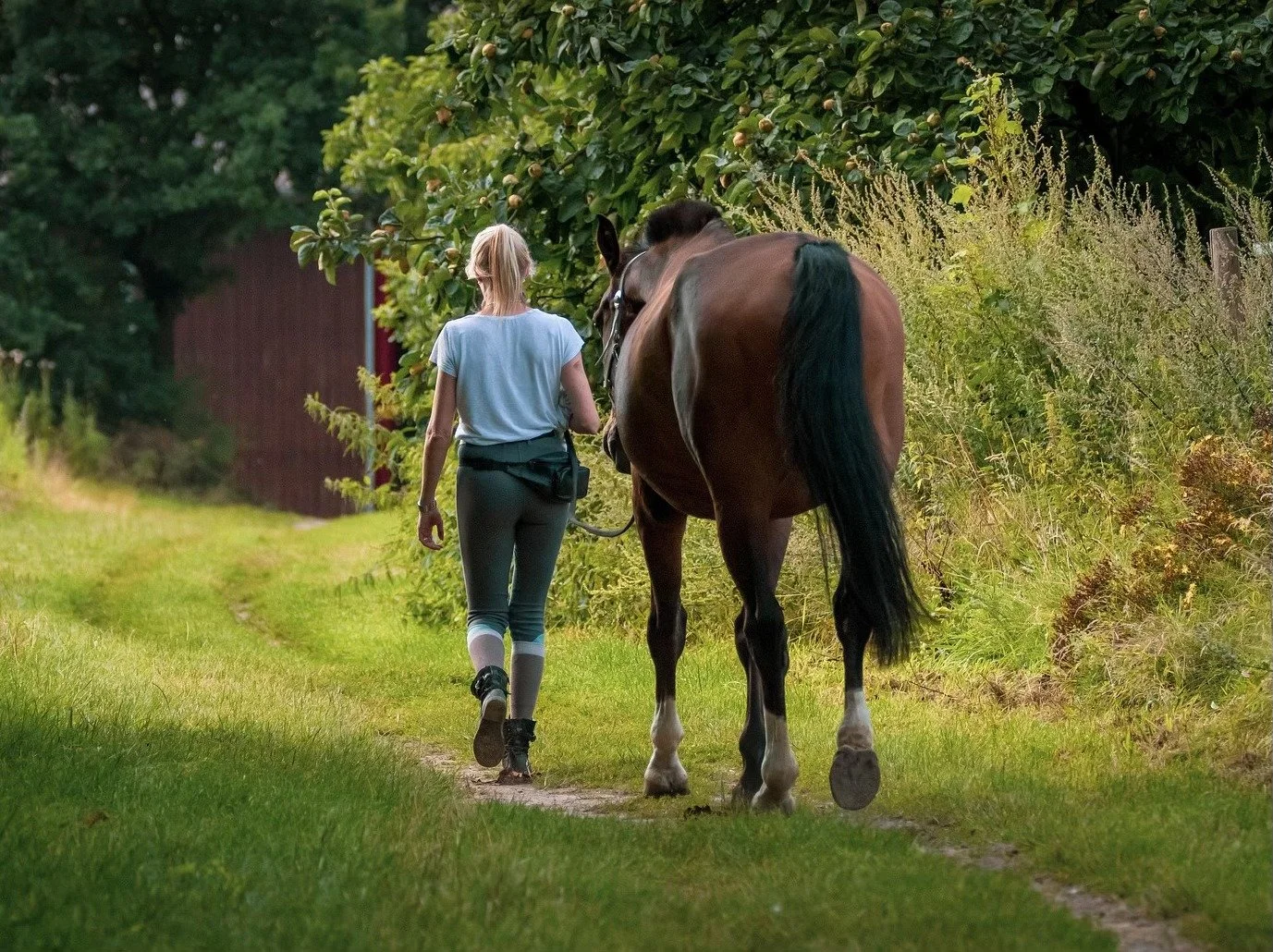
Many owners assume their company alone is enough to keep a horse relaxed. In a new study of riding-school Warmblood mares and geldings, researchers tested whether a calm human can stand in for equine company during brief separations, and found the effect was limited at best.
For the first part of the study each horse stood with two familiar herd mates. In the next three-minute phase, they were separated from the others but remained with a familiar handler. During this isolation period, the horses showed clear signs of stress: their heart rate was higher and heart-rate variability lower.
Across repeated sessions, the handler either stayed neutral, offered calm stroking, spoke quietly, or did both. None consistently reduced the individual horses stress. Quiet talking produced the most consistent (yet still minor) benefit, mainly in geldings; mares remained the most stressed.
Behaviour was recorded in detail using a structured ethogram – a catalogue of defined behaviours – so that trained observers could record how often and how long behavioural indicators of stress (e.g. calling, fidgeting, raised head/neck posture, ear/face tension) appeared in each phase. Heart activity was measured using a wireless heart monitor to assess heart rate and heart-rate variability.
Separation is inherently stressful for many horses, and a human cannot entirely replace equine company. Put your horse’s social needs first, ensure they have regular, predictable time with their herd mates.
If they become anxious when taken away from others, build exposure gradually, keep sessions short, and prioritise management that ensures they can see and hear their equine friends. When separation is unavoidable, a calm human voice may help some horses, but don’t expect it to solve the stress of isolation.
Study: Janczarek, I.; Gazda, I.; Barłowska, J.; Kurnik, J.; Łuszczynski, J. Social Isolation of Horses vs. Support Provided by a Human. Animals 2025, 15, 1649.