I am Now a Fear Free Certified Professional
I am very proud to say that I am now a Fear Free® Certified professional, after passing the equine specific Veterinary Certification Programme. I think the Fear Free Certification is a fantastic initiative and something all vets, vet nurses, technicians and trainers should be using and supporting in practice.
Read More
Tool use confirmed in horses
A new German study has confirmed that horses do use tools, however the researchers say this is a rare phenomenon. The research team have identified 13 unambiguous cases of tool use in equids by twelve horses and one mule.
Read More
Understand Horses Live
I am pleased to announce that I will be giving a lecture and a demo at Understand Horse Live at Writtle University College, Essex on 3-4 September 2022.
Read More
Can you help a horse that is anxious about being tied up?
This is Magic, who was previously very anxious when he was tied up. His lovely owner Jen has been working on retraining him to stand when tied and has shared this great idea for making the process more fun and rewarding for him.
Read More
CBD may lower reactivity in horses
Cannabidiol (CBD) is a nutraceutical that is increasingly being used to relieve pain and to treat a number of common ailments. It has been shown to decrease anxiety in humans and small animals, but there has been very little research on its use with horses. A recent study has looked at the effect of feeding a pelleted CBD supplement on equine reactivity and heart rate.
Read More
Can horses smell fear?
A recent study suggests horses may be able to smell human fear when presented with their body odour. Researchers at the University of Wrocław presented twenty-one Thoroughbred and Arab horses with body odour samples collected from humans who were either happy after watching a cartoon, or frightened after watching a horror film.
Read More
Thank you to Writtle University College
I have been awarded an honorary degree by Writtle University College for distinction in the equine industry. I attended the graduation ceremony alongside Khadijah Mellah and Ros Canter who also accepted honorary degrees. I feel very proud to be honoured alongside two such inspirational women.
Read More
Why do horses develop separation anxiety?
Separation anxiety is a common behavioural problem in horses. Most yards have a horse who is anxious about leaving the yard or panics when his friend is removed. Why does this happen? And why are some horses affected more than others?
Read More
Behaviour problems are more likely if a whip is used to load horses for travel
A new study has found that horses were 5 times more likely to have travel-related behaviour problems if a whip was used when loading. The study, carried out by Italian researchers has found a number of risk factors that increase the likelihood of behaviour problems and injuries when loading and travelling horses.
Read More
Can eating from a haynet cause back problems in horses?
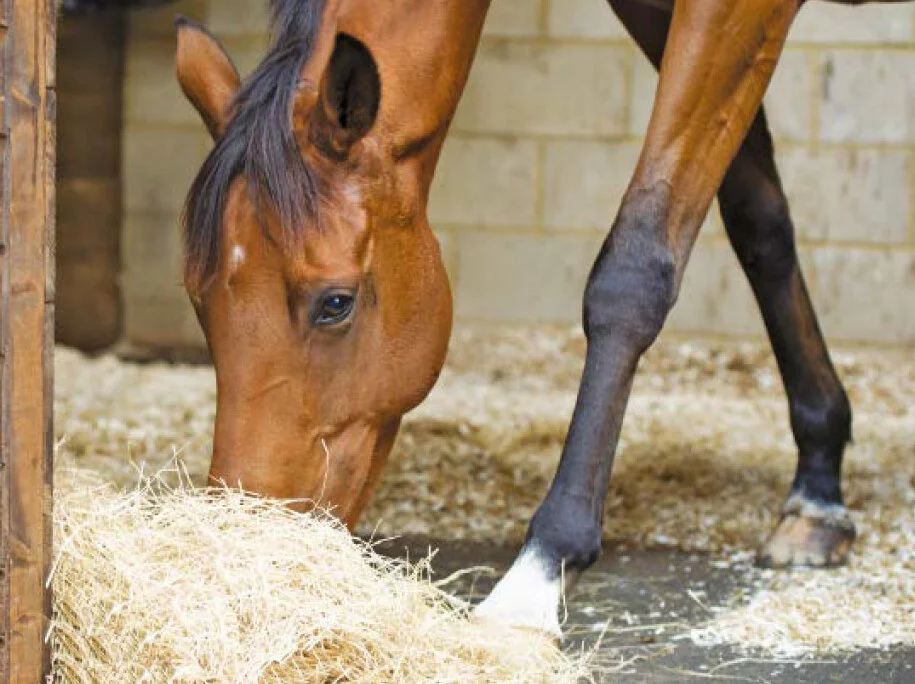
Horses are grazing animals that have evolved over millions of years to eat at ground level. When we give a horse a stationary haynet, or a hay rack up high to eat from for a long period of time, this is very unnatural for them – both physically and mentally.
Read More
What would your horse like for Christmas?
There seems to be a growing confusion over what our horses like, want, or even need. Horse owners are encouraged to focus on feed, supplements, tack, gadgets or the next new innovation in rugs and ignore the bigger picture.
Read More
Understand Horses
I have some very exciting news! I have just launched a new online equine education platform with courses for horse owners, equine students and industry professionals.
Read More
Horses can recognise their keeper from a photograph
A recent study has found that horses presented with photos of humans can recognise their keepers at a rate much better than chance.
Read More
Tight nosebands may cause bone damage
Does your horse have concavity or a bony lump on their nasal bone or lower jaw? If so, it could be the result of how you fasten your bridle. A new study has found that bony changes may be caused by the use of tight nosebands.
Read More
How do holidays at grass affect stabled horses?
Researchers in France have studied the effects of these holiday periods on horse behaviour. Their results suggest that being at pasture does improve horse welfare, but also that several days of adaptation would be needed.
Read More
Links between behaviour, discipline and gut health found in sport horses
A team of researchers have looked at the link between gut health and the behaviour, management and discipline of horses. They have found that behaviours indicated in poor welfare – such as stereotypies and aggression – are linked to the composition of their gut bacteria.
Read More
Can toilet rolls teach us about horse behaviour?
The current coronavirus crisis has changed all our lives. We’ve been forced into situations that most of us will never have experienced in our lifetimes. Some of the human behaviour problems that have appeared as a result can be compared to what we see regularly in our horses…
Read More
Does your horse become stressed if their feed is late?
A recent study by a team of researchers in Slovenia has looked at the behaviour of eight horses when fed breakfast at regular or irregular feeding times and found they do become stressed if their meal arrives late.
Read More
Licking and chewing behaviour in horses
Horses sometimes lick and chew during training and this has often been interpreted as a sign that the horse is learning or showing ‘submission’ to the trainer. However, a new study suggests that this non-nutritive licking and chewing behaviour is a natural behaviour that is shown after a stressful situation.
Read More
Does music affect how stabled horses sleep at night?
There have been several studies looking at the effect of music on horse behaviour in various situations like daytime stabling and travelling, but none have looked at the effect on nocturnal behaviour or sleep.
A team of researchers at Hartpury University have found that playing classical music to horses at night does have a significant effect on their behaviour.
Read More